
1. Stay safe first
Never drive into a flooded street. It is hard to tell how deep the water is or whether the road underneath has washed out, and even shallow moving water can push a car off the road. Turn around and find another way.
If your car is already sitting in water, wait until the water has gone down before you go near it. Stay away from downed power lines and from any standing water that could be touching them.
2. Do not start the engine
This is the most important step. If water reached the engine’s air intake, trying to start it can pull water into the cylinders. Water does not compress like air, so the engine can lock up and bend internal parts. This is called hydrolock, and it can turn a car that could have been dried out and repaired into one that needs a new engine.
Also avoid turning the key to "on" or pressing the start button just to look at the dashboard: water in the wiring and computers can cause short circuits. If you know how and can reach it safely, disconnecting the negative battery cable lowers that risk.
Hybrids and electric vehicles have high-voltage batteries. After a flood, do not touch the battery or any orange high-voltage cables, and keep people away from the car: saltwater damage can create a fire risk, sometimes days later.
3. Check how high the water got
Once the water is gone and the area is safe, look for clues about how deep it was. This helps you, your insurance company and the shop decide what needs to be checked:
- A water line or mud on the body, the door panels or the seats
- Wet carpet, or water sitting in the footwells or the trunk
- The engine oil: pull the dipstick. Milky or light brown oil, or a level above the full mark, can mean water got into the engine
- Fog or droplets inside the headlights and taillights
- Mud, leaves or grass in the engine bay, in the air filter box or under the car
- A musty smell inside the cabin
4. Document the damage for insurance
Before the car is moved or cleaned, take photos and videos of the water line, the interior, the engine bay and the dipstick, and write down when and where the flooding happened. Call your insurance company as soon as you can: your policy decides what is covered and how the claim is handled.
For title and registration questions about a flood-damaged or total-loss vehicle in Florida, check the Florida Department of Highway Safety and Motor Vehicles .
5. Have it towed, not driven
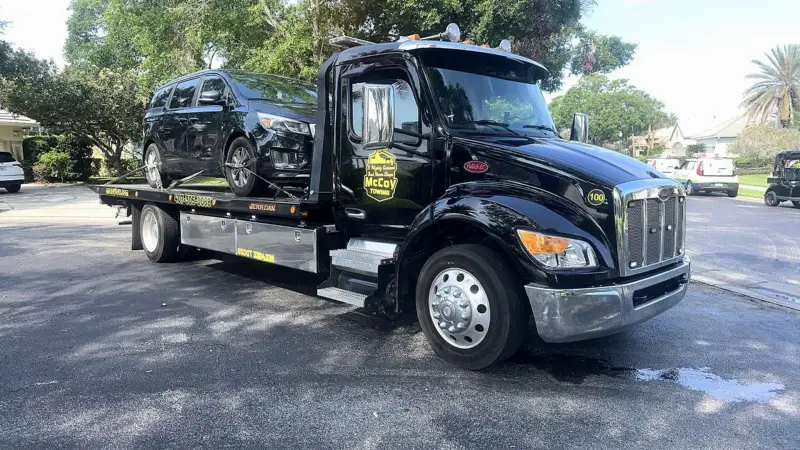
Even if the water has gone down and the car looks fine, do not try to drive it to a shop. Have it towed to a repair shop so nobody starts the engine before it has been checked. McCoy Towing is available 24/7 at (407) 305-0088 and can bring the car to the McCoy Enterprises shop at 6450 S Orange Ave in Orlando.
After a big storm, many drivers need a tow at the same time. If the car is parked somewhere safe and out of the water, waiting for a tow is better than risking the engine by driving it.
6. What a shop should check
A car that sat in water needs more than a quick look. Depending on how high the water got, a diagnostic inspection should check the engine oil and other fluids for water, the air intake and filter, the battery, starter and electrical connections, the brakes and the interior. Tell the shop whether it was rainwater or saltwater: saltwater causes corrosion faster.
At McCoy Enterprises we explain what we found and give you an estimate before any repair begins. The shop is open Monday to Friday, 7:30 AM to 4:30 PM, and McCoy Towing answers 24/7.
Before the next storm
- If flooding is expected, move the car to higher ground, such as an upper level of a parking garage
- Keep photos of your car and copies of your registration and insurance card on your phone
- Save McCoy Towing’s 24/7 number in your phone: (407) 305-0088
Stuck right now? McCoy Towing answers 24/7 and can bring your car to our Orlando shop, where we diagnose it and get your approval before any repair.
This guide gives general information. Every vehicle is different: if something feels unsafe, stop driving and call for help.