
Symptoms and what they usually mean
- High-pitched squeal when braking: often the built-in wear indicator telling you the pads are getting thin. Book an inspection soon.
- Grinding or scraping metal: the pads may be worn through, with metal rubbing the rotor. Get it checked right away: stopping power is reduced and rotor damage gets worse with every stop.
- Soft or spongy pedal, or a pedal that sinks: possible air or a leak in the brake fluid system. This is a safety issue: do not keep driving normally.
- Steering wheel or pedal shakes when braking: often uneven rotor wear.
- Car pulls to one side when braking: a sticking caliper or uneven pad wear.
- Brake warning light on: low fluid or a system fault. Check it right away.
How urgent is it?
A squeal gives you some time to plan. Grinding, a soft pedal or a brake warning light do not. If the pedal feels wrong or the car does not stop the way it should, it is safer to have the car towed than to drive it. McCoy Towing is available 24/7 at (407) 305-0088.
What a brake inspection includes
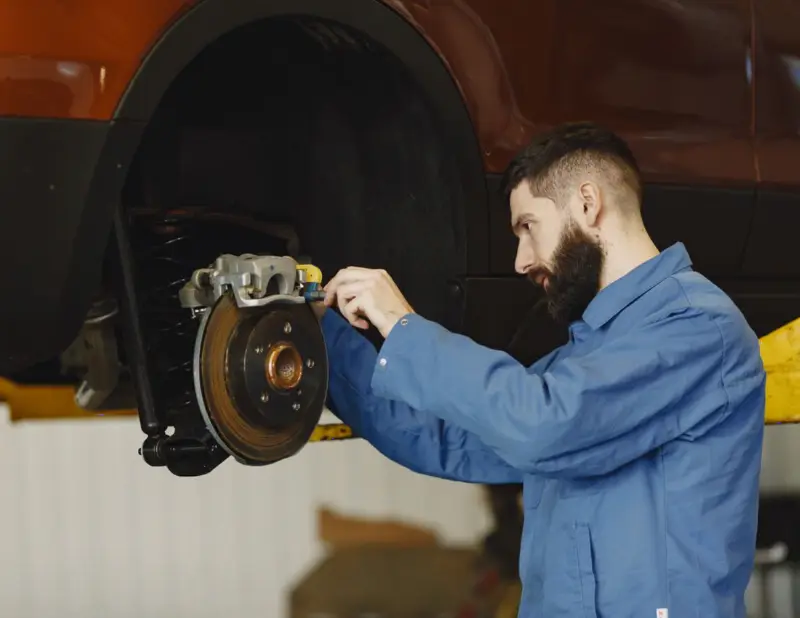
A proper inspection measures pad thickness, checks the rotors for wear and warping, looks at calipers, hoses and fluid, and test-drives the car. You should only pay for the parts that actually need replacing.
At McCoy Enterprises in Orlando we inspect the brakes, explain what we found and give you an estimate before any work begins. Not every brake job needs new rotors.
Want a professional to take a look? Our Orlando shop diagnoses the problem, explains it in plain language and gives you an estimate before any repair.
This guide gives general information. Every vehicle is different: if something feels unsafe, stop driving and call for help.